Most productivity problems aren’t about laziness. They’re about unclear priorities and too many decisions.
When I reduced decision fatigue, simplified my planning, and focused on small actions, I started faster, felt less overwhelmed, and finished more of what mattered.
These five habits are what made that shift possible.
1. Planning Tomorrow Before Today Ends
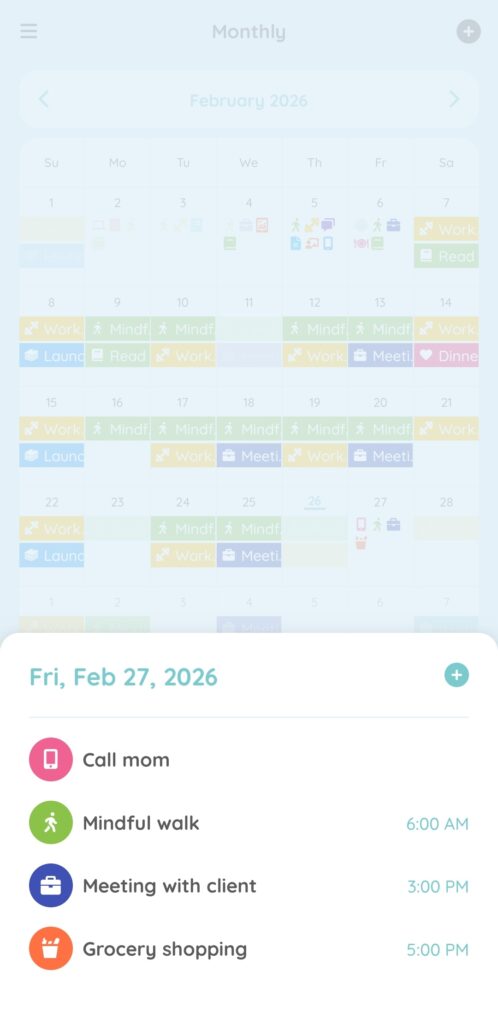
Instead of waking up unsure what to do, I spend 2–3 minutes planning tomorrow before ending the day. For example:
Tomorrow:
- Call mom
- Mindful walk
- Meeting with client
- Grocery shopping
When I wake up, I don’t waste energy deciding. I just start.
2. Limiting My Day to 3 Important Things
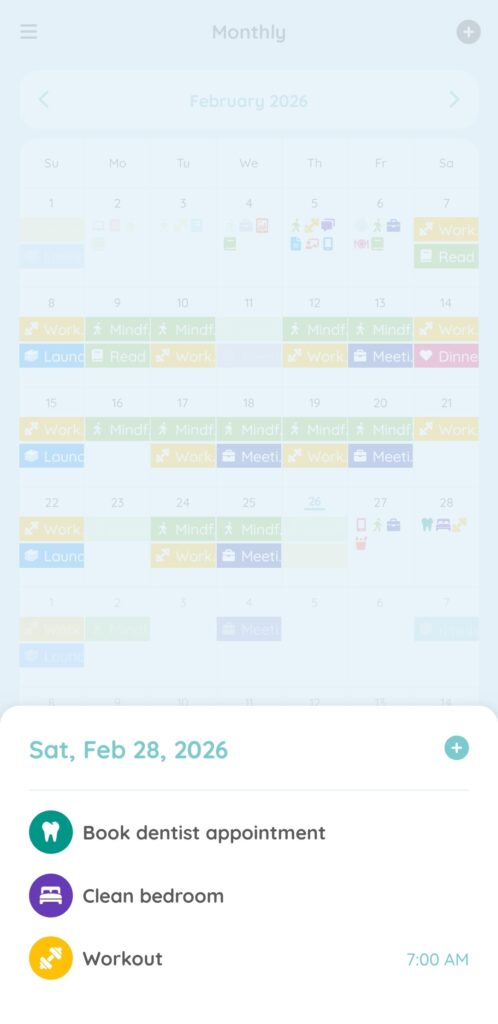
Long to-do lists used to overwhelm me. Now I choose three meaningful things for the day. For example:
Today’s Focus:
- Book dentist appointment
- Clean bedroom
- Workout
If I complete those, the day feels successful, even if smaller things remain.
3. Writing Things Down Immediately
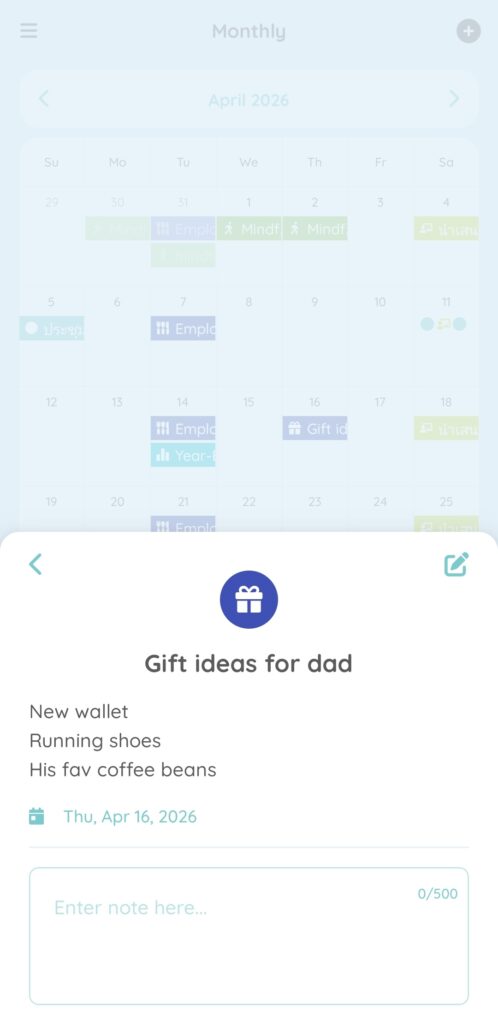
If I don’t write something down, I either forget it or think about it all day. So I capture it immediately. For example:
Event: Gift Ideas for Dad
Notes:
- New wallet
- Running shoes
- His favorite coffee beans
Now my brain can relax. It’s saved.
Your mind is for thinking, not storing reminders.
4. Planning the Month Before Planning the Day
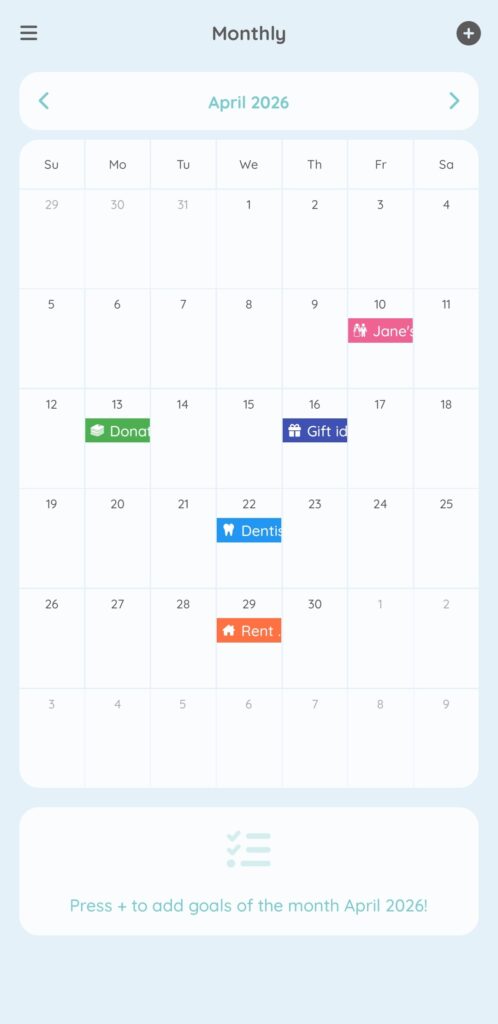
Looking only at today made me reactive. Now I check the month first. For example:
- April 10 – Jane’s Wedding
- April 13 – Donate Clothes
- April 22 – Dentist Appointment
- April 29 – Rent Due
When I see the bigger picture, I plan daily tasks more realistically. It prevents last-minute stress.
When important dates are visible early, nothing sneaks up on you. You don’t suddenly realize: A birthday is tomorrow, or rent is due in two days. It gives you time to spread the effort. For example: If rent is due April 29, you could review budget on April 10 or transfer the funds on April 20.
Without a monthly overview, you might overload certain weeks and schedule heavy tasks around those days.
5. Using To-Do Lists Inside Events
This one changed everything. Most planners let you create events. But life isn’t just events, it’s details. And details are what we forget. Instead of just adding an event to a specific date, I add a to-do list inside the event. For example:
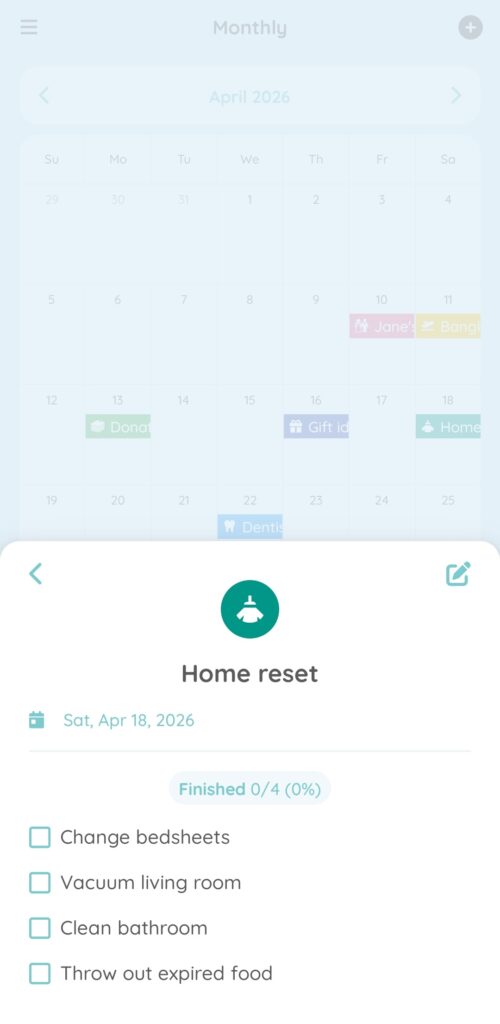
Event: Home Reset
To-Do List:
- Change bedsheets
- Vacuum living room
- Clean bathroom
- Throw out expired food
One event. All steps inside.
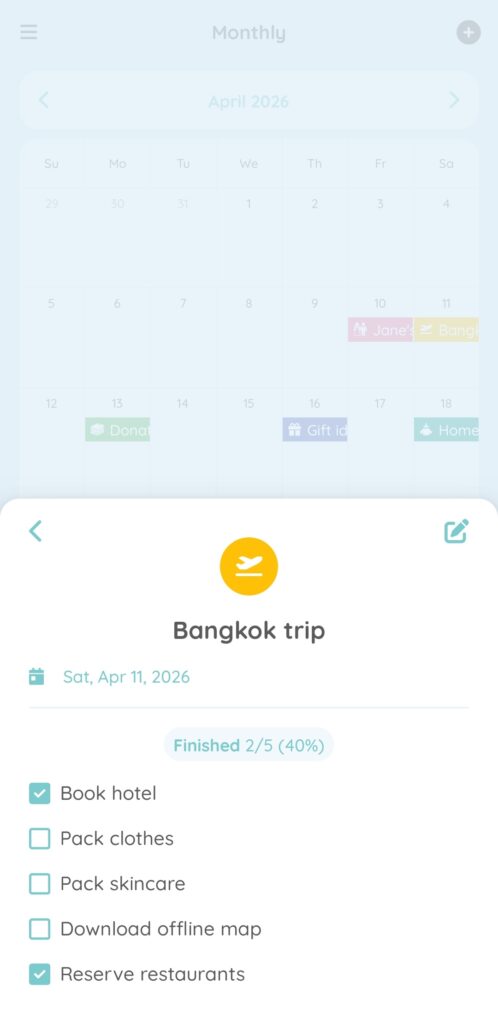
Event: Bangkok Trip
To-Do List:
- Book hotel
- Pack clothes
- Pack skincare
- Download offline map
- Reserve restaurants
Now the trip feels organized before it even starts.
Why This Matters
Having a to-do list inside an event:
- Breaks big plans into small steps
- Keeps related tasks together
- Prevents forgotten details
- Makes progress visible
- Reduces overwhelm
Productivity didn’t improve because I became stricter. It improved because I became clearer.
I plan ahead.
I look at the bigger picture.
I break plans into small steps.
✨ The smallest habit makes the biggest difference.