If you’ve ever tried to get organized, you’ve probably asked this question:
Should I plan my day—or my whole week?
The truth is, both daily and weekly planning work… just in different ways. Understanding when and how to use each one can completely change how productive (and calm) you feel.
Let’s break it down.

What Is Daily Planning?
Daily planning focuses on what you’ll do today—nothing more, nothing less.
Why Daily Planning Works
- Keeps you focused on immediate priorities
- Reduces overwhelm by limiting choices
- Helps you adapt quickly when plans change
It’s especially useful when:
- Your schedule changes often
- You’re juggling many small tasks
- You feel stressed or easily overwhelmed
Daily planning is great for execution—getting things done right now.
The Downside
- Easy to lose sight of long-term goals
- You may react to tasks instead of planning ahead
- Can feel repetitive if done without direction
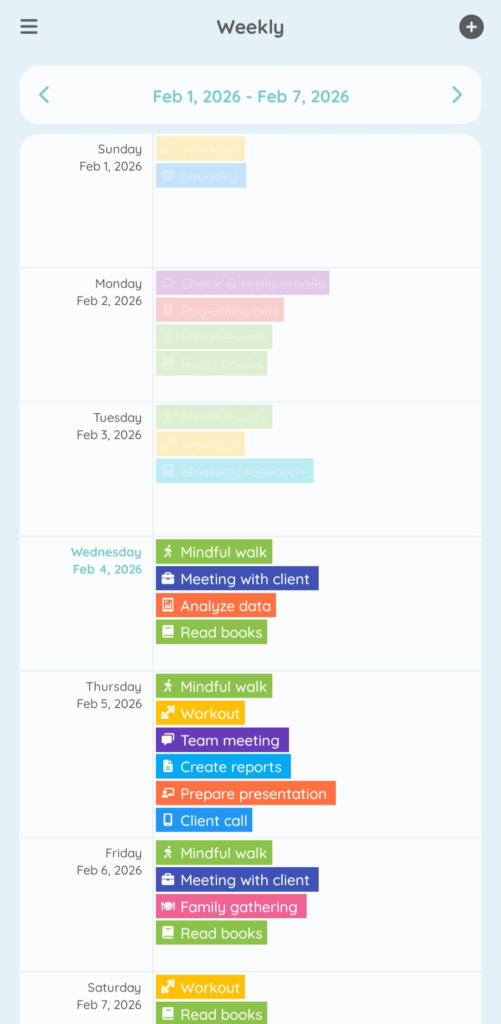
What Is Weekly Planning?
Weekly planning looks at the big picture of your week.
Why Weekly Planning Works
- Gives clarity on what really matters
- Helps balance work, rest, and personal time
- Prevents overbooking your schedule
It’s ideal when:
- You have deadlines or recurring commitments
- You want better work–life balance
- You’re planning goals, not just tasks
Weekly planning is great for direction—deciding where your time should go.
The Downside
- Can feel overwhelming if overplanned
- Plans may become unrealistic
- Less flexible when unexpected things happen
So… Which One Actually Works?
Here’s the honest answer:
The best system combines both.
Weekly planning sets your intent.
Daily planning handles the reality.
Try this simple method:
1. Plan Your Week (5–10 minutes)
- Decide your top priorities
- Block important events and deadlines
- Leave breathing room
2. Plan Each Day (1–2 minutes)
- Choose 3–5 realistic tasks
- Adjust based on energy and time
- Focus on progress, not perfection
This keeps you organized without pressure.